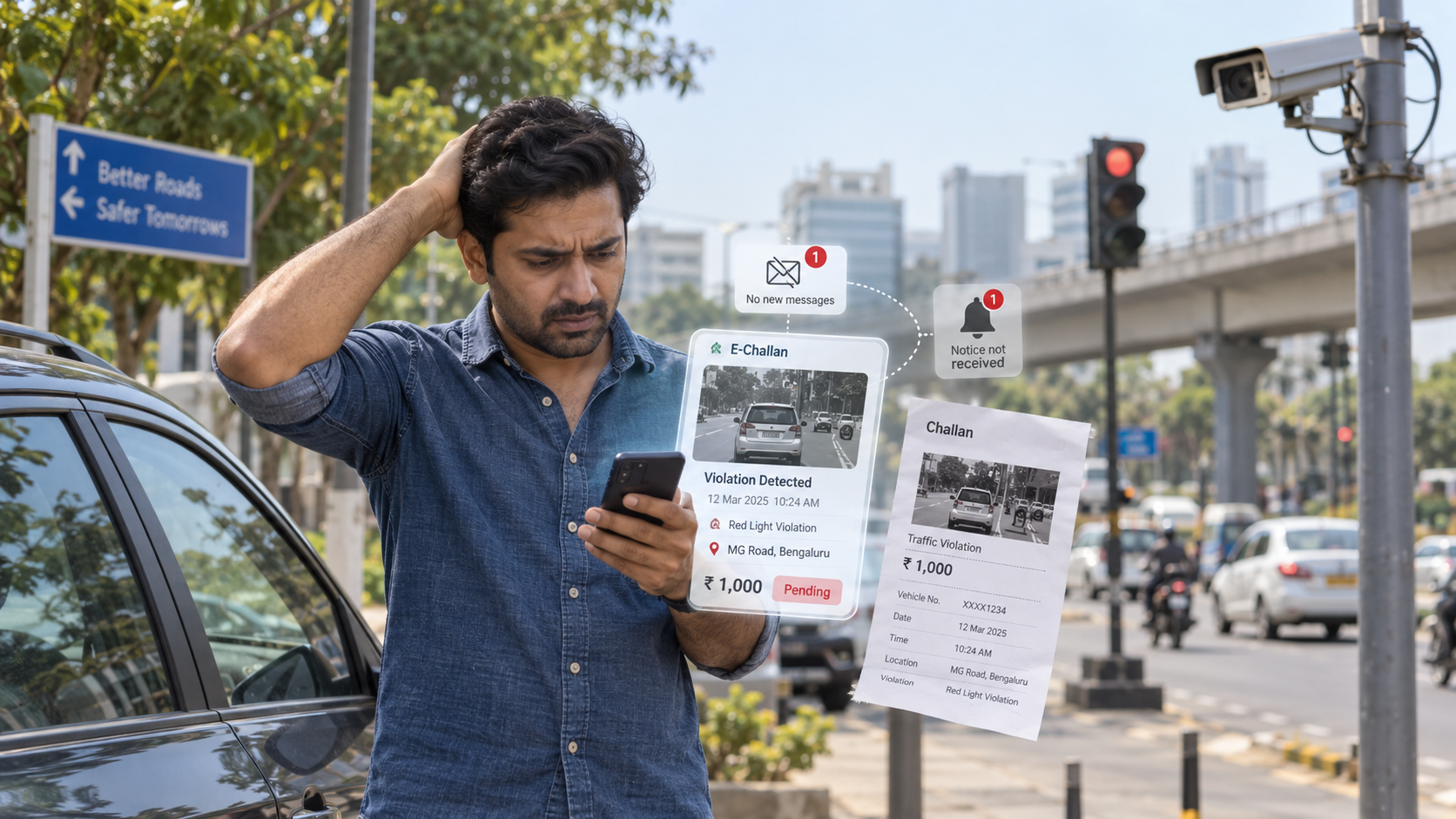
Traffic enforcement in India is changing rapidly. A driver no longer needs to be stopped by a traffic officer to receive a challan. Cameras, automated number plate recognition systems, and digital enforcement platforms can record certain violations and generate electronic notices linked to a vehicle.
This creates a common situation: you discover an e-Challan online even though you never received a physical notice, SMS, or other direct communication.
Does that make the challan invalid? Not necessarily. Understanding how digital traffic notices work can help you decide what to do when an unexpected challan appears against your vehicle.
How Can a Challan Be Issued Without Stopping the Driver?
Traditional traffic enforcement often involved an officer stopping a vehicle and handing the driver a paper challan. Digital enforcement works differently.
Depending on the system used by the relevant authority, a violation may be detected through:
- CCTV traffic cameras
- Automatic Number Plate Recognition systems
- Speed detection equipment
- Red-light enforcement cameras
- Other authorised electronic monitoring systems
The vehicle's registration number can then be matched with government records and an electronic challan can be generated. Consequently, the driver may continue their journey without knowing that a violation has been recorded.
Why You May Not Receive a Notice Immediately
There are several practical reasons why a vehicle owner may not see a notification at the time a challan is generated.
For example, contact information associated with the vehicle may be outdated, a message may not reach the intended recipient, or the violation may have been detected automatically after the vehicle passed through a monitored location.
The absence of an SMS or physical notice therefore should not automatically be treated as proof that no challan exists. The more important step is to verify the challan through an authorised system.
What Information Does a Digital Challan Contain?
An electronic challan is intended to create a record of the alleged traffic violation. Depending on the circumstances and applicable system, the record can contain information such as:
- Vehicle registration number
- Date and time of the alleged offence
- Location
- Type of violation
- Applicable penalty
- Challan reference number
- Supporting photographic or electronic evidence, where available
Reviewing these details is important before making any payment or deciding to challenge the notice.
What If the Challan Appears on Your Vehicle but You Were Not Driving?
This is an important distinction.
A vehicle can be associated with a traffic violation even when the registered owner was not personally driving it at the time. For example, a family member, employee, friend, or another authorised person may have been using the vehicle.
The registered owner should therefore first determine who was using the vehicle when the alleged violation occurred. The applicable legal responsibility can depend on the nature of the offence, the available evidence, and the relevant provisions governing the violation.
What If You Believe the Challan Is Wrong?
Discovering an unexpected challan does not mean you should immediately ignore it or assume that the system is always correct.
Start by checking the details. Ask yourself:
- Is the registration number correct?
- Was the vehicle in the stated location?
- Does the date and time make sense?
- Does the available image actually show your vehicle?
- Is the alleged violation identifiable?
- Is the challan duplicated?
If something does not match, preserve the available information and supporting evidence. Depending on the applicable procedure, a person may have the opportunity to contest a challan through the designated mechanism.
Why You Should Not Simply Ignore It
An unexpected challan can be easy to overlook, particularly when no notification was received. However, leaving an electronic challan unresolved can create problems later.
Depending on the circumstances, an unresolved traffic matter may result in additional penalties, notices, administrative complications, or further legal proceedings.
This is particularly important for commercial vehicle owners and fleet operators, where multiple unresolved violations can affect day-to-day compliance management.
The safest approach is to verify the record and take appropriate action rather than allowing it to remain unattended.
Be Careful With Fake e-Challan Messages
There is another risk associated with digital traffic notices: fraud.
Scammers may send messages claiming that a vehicle has an unpaid challan and provide a suspicious payment link. A message may look convincing while actually directing the recipient to a fraudulent website or application.
Vehicle owners should therefore avoid clicking unknown links or sharing OTPs, passwords, banking information, or other sensitive details in response to unsolicited messages.
Always verify a challan through the appropriate official channel before making a payment.
Keep Your Vehicle Information Updated
Digital traffic enforcement depends heavily on accurate vehicle and owner information. Keeping registration and contact details updated can make it easier to receive relevant notifications and manage vehicle-related obligations.
Vehicle owners should periodically review their documents and ensure that important information has not become outdated.
This is particularly important after:
- Changing an address
- Selling or purchasing a vehicle
- Transferring ownership
- Updating contact details
- Changing other relevant registration information
Good record-keeping can prevent many avoidable compliance problems.
When Legal Advice Makes Sense
A routine traffic violation may be straightforward to resolve. However, professional legal assistance can be useful when an unexpected challan involves disputed evidence, repeated violations, vehicle seizure, licence-related consequences, or potential court proceedings.
Legal guidance can help a vehicle owner understand the circumstances, evaluate available evidence, and determine the appropriate course of action.
The Bigger Shift Toward Digital Traffic Enforcement
The move from paper notices to digital enforcement is part of a wider transformation in India's traffic management system. Technology allows authorities to monitor roads at scale and maintain electronic records of violations.
For drivers, this means traffic compliance can no longer be based only on whether an officer stopped them.
A responsible vehicle owner should periodically check relevant records, maintain valid documents, follow traffic regulations, and respond promptly when an electronic violation appears.
Final Word
Finding an e-Challan you never knew about can be confusing, but it is not a situation that should simply be ignored. A digital notice may have been generated after a camera or automated system detected a violation without stopping the vehicle.
The right response is to verify the challan, examine the available details and evidence, and resolve or challenge it through the appropriate process. If the information is incorrect or the matter has legal consequences, professional guidance can help you understand your options.
As traffic notices continue moving into the digital space, staying informed is becoming just as important as following the rules of the road.
