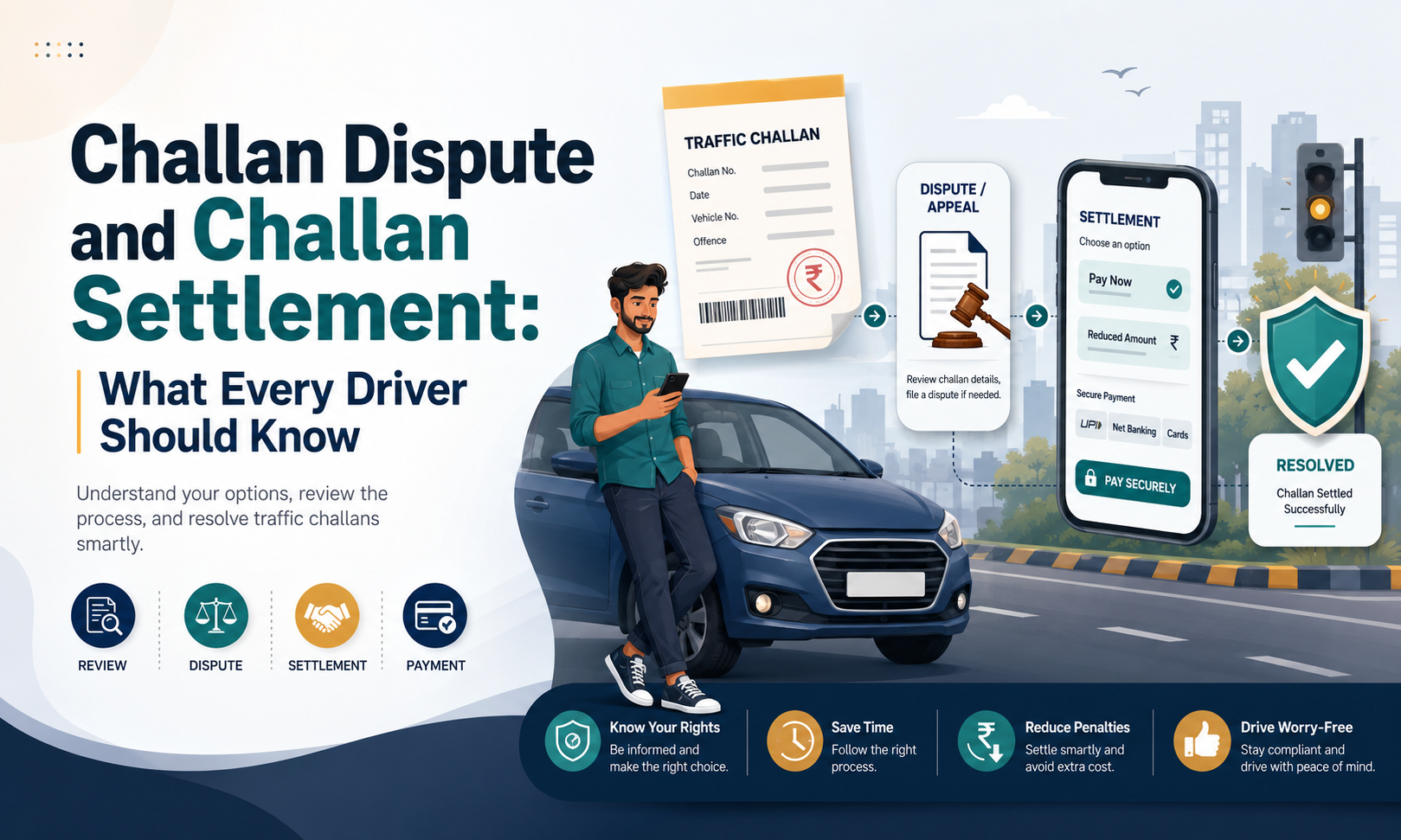
Receiving a traffic challan is not always the end of the story. While many challans are valid and should be paid promptly, there are situations where drivers believe a penalty has been issued incorrectly or where legal clarification is required. In such cases, understanding the process of a challan dispute and challan settlement becomes essential.
As traffic enforcement in India becomes more technology-driven, cameras, AI-enabled monitoring systems, and digital enforcement tools are issuing thousands of challans every day. Although these systems improve road safety, they are not immune to technical errors or mistaken identity. Knowing your legal rights can help you respond appropriately instead of simply accepting every penalty.
When Should You Dispute a Traffic Challan?
Not every challan deserves to be challenged. However, if you genuinely believe that the penalty has been issued in error, you have the right to seek clarification or initiate the appropriate legal process.
Some common situations include:
- The vehicle registration number has been recorded incorrectly.
- The vehicle shown in the evidence is not yours.
- The location or time of the violation is inaccurate.
- The violation was already resolved but still appears as pending.
- Duplicate challans have been issued for the same offence.
- Technical or camera-related errors resulted in incorrect detection.
Before taking any action, carefully review every detail mentioned in the challan.
Understanding Challan Settlement
A challan settlement refers to resolving a traffic challan through the appropriate legal or administrative process. In many cases, settlement simply means paying the applicable fine. However, if the matter involves disputed facts, repeated violations, documentation issues, or legal proceedings, additional steps may be required before the case is considered resolved.
The objective of challan settlement is to close the matter in accordance with applicable traffic laws while ensuring that the rights of both the authorities and the vehicle owner are respected.
Why Ignoring a Challan Is Never a Good Idea
Some drivers assume that if they ignore a traffic challan, it will eventually disappear. In reality, an unresolved challan may continue to remain linked with the vehicle or driver's records.
Ignoring a challan may lead to:
- Additional financial penalties.
- Legal notices.
- Delays in vehicle-related administrative processes.
- Compliance issues for commercial vehicles.
- Greater difficulty resolving the matter later.
Even if you intend to dispute a challan, it is advisable to begin the process without unnecessary delay.
Documents That May Help During a Challan Dispute
If you decide to contest a challan, supporting documentation can strengthen your case.
Depending on the situation, useful documents may include:
- Vehicle registration certificate.
- Driving licence.
- Insurance certificate.
- Pollution Under Control (PUC) certificate.
- GPS records, if available.
- Photographs or videos supporting your claim.
- Previous challan payment receipts.
- Any communication received from the traffic authorities.
Maintaining organized vehicle records can make dispute resolution significantly easier.
Common Reasons Behind Incorrect Challans
Digital traffic enforcement has improved efficiency, but certain practical challenges still exist.
Some possible reasons for incorrect challans include:
- Incorrect Number Plate Recognition: Automated systems may occasionally misread damaged, dirty, or unclear registration plates.
- Human Data Entry Errors: Manual input mistakes can result in incorrect vehicle details being recorded.
- Camera Limitations: Poor lighting, weather conditions, or unclear footage may affect image accuracy.
- Duplicate Violations: The same incident may sometimes generate multiple challans if not reviewed carefully.
- Technical System Errors: Like any digital system, enforcement technology can occasionally experience software-related issues.
Recognizing these possibilities helps drivers assess whether further review is necessary.
Steps to Handle a Challan Dispute Responsibly
If you believe a challan is incorrect, taking a structured approach is important.
You should:
- Verify every detail mentioned in the challan.
- Compare the evidence with your own records.
- Collect all supporting documents.
- Preserve payment records, if any.
- Follow the prescribed legal or administrative procedure.
- Respond within the applicable timelines.
Remaining cooperative throughout the process generally leads to faster resolution.
Responsible Driving Reduces Future Disputes
The best way to avoid challan-related issues is by following traffic regulations consistently.
Responsible drivers should:
- Observe speed limits.
- Wear helmets and seat belts.
- Keep vehicle documents valid and updated.
- Renew insurance before expiry.
- Avoid distracted driving.
- Follow traffic signals.
- Park only in designated areas.
- Stay informed about updated traffic regulations.
Compliance not only reduces penalties but also improves road safety for everyone.
Why Legal Guidance Can Make a Difference
While straightforward challans are often resolved through routine payment, more complex situations may require professional legal support. Cases involving repeated violations, commercial vehicles, licence suspension, vehicle seizure, disputed evidence, or procedural errors can benefit from proper legal evaluation.
Legal professionals can help individuals understand the applicable laws, assess the available options, review supporting documents, and guide them through the appropriate dispute or settlement process. This ensures that decisions are made based on legal provisions rather than assumptions.
For businesses operating transport fleets, timely legal guidance can also help reduce operational disruptions and improve regulatory compliance.
Conclusion
A traffic challan should never be ignored, but it should not always be accepted without question either. If the violation is genuine, resolving it promptly is the most practical approach. However, if you believe the challan has been issued incorrectly, understanding the challan dispute process and seeking an appropriate challan settlement can help protect your legal rights.
The combination of digital enforcement and evolving traffic laws makes it more important than ever for drivers to remain informed. By maintaining proper vehicle documentation, reviewing challans carefully, acting promptly, and obtaining professional legal assistance when necessary, you can resolve traffic-related issues efficiently while ensuring full compliance with the law.
